
Auto companies are now grappling with a slowdown in sales, triggered by pent up demand due to the COVID-led lockdown easing a bit and supply-side issues for raw material.

The Indian economy is likely to post better than anticipated growth in the second quarter (July-September) owing to robust urban consumption and expansion in services, a Business Standard analysis of high-frequency indicators showed. While gross domestic product growth in the September quarter is expected to come below the 7.8 per cent print in the June quarter due to a favourable base fading, analysts say the print will be much closer to 7 per cent than the 6.5 per cent anticipated earlier. While the Reserve Bank of India (RBI) had estimated 6.5 per cent growth for July-September, last month Governor Shaktikanta Das said the growth figure would surprise on the upside.

JLR is developing its own autonomous car technologies, which could one day trickle into Tata's more affordable people carriers.

'We started AgniKul to show that space transportation should be as simple as road transportation.'
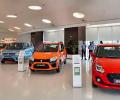
While commercial vehicles are expected to benefit from strong replacement demand, the two-wheeler and tractor segments are expected to gain from a recovery in the rural economy.

Ather Energy would set up 30 charging points across Bengaluru by the end of May and the number would go up to 60 by the end of the year.
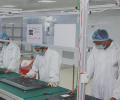
Dixon Technologies right now is a beehive of activity. It is building a new facility in Noida to make 1.3 million laptops for Taiwanese PC maker Acer. The facility must be up and running in four months. The pace of activity will only increase. Last week Dixon won a similar contract from Lenovo, the Chinese personal computer maker and the third largest information technology (IT) hardware brand in India, to assemble laptops and notebooks. Though the clientele in these two cases is Taiwanese and Chinese, Dixon is a company reaching for the stars with its feet planted firmly in the Indian government's policy.

GST Council extends anti-profiteering authority's tenure, sends rate cut on EVs to fitment panel and also extended the date for filing annual returns under the GST by two months to August 30.

The company, which already has around 66 per cent market share in the hatchback segment and about 50 per cent in the overall domestic passenger vehicle segment, currently sells Vitara Brezza and S-Cross in the SUV segment. In an interaction with PTI, MSI managing director and CEO Kenichi Ayukawa acknowledged that there was some lag in launching new products due to the pandemic but the company is now on track regarding new model launches.

The Camry hybrid sold 466 units in January-April in the region.

Of the 15 car manufacturing companies in India, eight have a market share of below 2 per cent, raising questions about their long-term future in a competitive market that has already seen Ford Motors and General Motors slam the door on India.
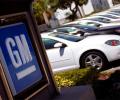
The move marks the entry of GWM, one of the largest manufacturers of sport utility vehicles (SUVs) and pick-ups, into the Indian market and a complete exit for GM from the country, two years after it stopped selling cars here.

At a time when climate change poses significant challenges and the need for sustainable and efficient farming practices has never been more critical, unmanned aerial vehicles (UAVs) allow farmers to gain a bird's-eye view of their crops from ground level. Drones have become a new force in precision agriculture, helping increase productivity while prioritising sustainability and resilience. Fertiliser major IFFCO is exploring this very transformative power of technology in agriculture.
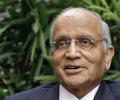
The regulatory burden is the highest on small cars, a key segment of the Indian automobile industry and having a uniform tax structure across all segments of vehicles will not augur well for the sector growth, according to Maruti Suzuki India chairman RC Bhargava. He also said India's economic growth rate could be higher if the manufacturing sector grows fast, which 'unfortunately' has remained a laggard despite the best efforts of the Narendra Modi-led government at the Centre due to implementation gaps at the ground level. "The burden of regulatory changes on the small cars is far higher than the regulatory burden on big cars and that is changing the whole market behaviour.

The change in stance follows a strong opposition by automakers of the proposed government plan to ban two-wheelers (below 150cc) and three-wheelers by 2023 and 2025, respectively

In October, the company had launched Ciaz in both petrol and diesel options.

Automobile companies are worried about challenges from electric mobility, automation and connected vehicles.

'India joined a select group of countries at the global level after this finding and it will fulfil the vision of Prime Minister Narendra Modi's 'Aatmanirbhar Bharat' (self-reliant India)'

The government has initiated a process to define standards and guidelines for electric charging stations.

India must integrate more with East Asia by getting into regional trade arrangements, lower its tariff walls, and improve the quality of its workforce, suggests T N Ninan.

Tesla, which produces the luxury Model S sedan and Model X sport utility vehicle, aims to become a high-volume automaker in a matter of years

Finance Minister Nirmala Sitharaman on Friday said the government is proposing additional tax deduction of Rs 1.5 lakh on interest paid on home loans taken up to March 2020 for purchase of house up to Rs 45 lakh.

Brushing aside concerns raised by proxy advisory firm IiAS on Suzuki's investment in the EV project, Maruti Suzuki chairman RC Bhargava on Thursday asserted that there was nothing in it against the interest of the company and its shareholders as it is part of an earlier arrangement. Countering the criticism from the proxy advisory firm, Bhargava noted that all models produced at Suzuki Motor Gujarat (SMG), including EVs, would be ultimately sold by Maruti Suzuki India (MSI) in the marketplace. IiAS has raised serious questions regarding the decision of the Suzuki Motor Corporation (SMC) to invest directly in the EV project instead of MSI doing it.

At Rs 1.24 lakh, it's the most expensive scooter manufactured in the country but the 450 deserves every penny.

While Toyota will acquire 4.94 per cent shares of Suzuki, worth $ 908 million, the latter will make a $ 454-million investment in the biggest automaker of Japan. Premium products from the Maruti stable such as the Baleno, Ciaz and Vitara Brezza will be sold under the Toyota brand with small changes.
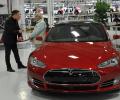
Elon Musk's likely referring to waiver of 30% local sourcing norm for setting up single-brand retail

After witnessing cloudy skies this year, the country's renewable energy sector is expected to boom with a likely investment of over $15 billion in 2022 as the government focuses on electric vehicles, green hydrogen, manufacturing of solar equipment as well as achieving the ambitious 175 GW renewable capacity target. India, which has an installed renewable energy generation capacity of a little over 150 GW, aims to reach 175 GW in 2022. Out of the total mix, 100 GW would be from solar, 60 GW from wind, 10 GW from bio-power and 5 GW from small hydro power projects.

Tata Motors group's investment for this fiscal is pegged at Rs 28,900 crore, mostly for its British arm Jaguar Land Rover (JLR), company chairman N Chandrasekaran said on Friday. The company will also look to raise capital separately for its electric vehicles (EV) business at an appropriate time. It is looking to have 25 per cent of its sales coming from EVs in the medium to long term, up from 2 per cent at present, he said while addressing the company's virtual AGM.

As a tech services company, Ola has never been in hardcore manufacturing. And unlike in ride hailing, which is a two-player market (Uber is the only other competitor), in two-wheelers it faces many entrenched players. But most of all, rivals say Ola's targets are out of sync with most, even ambitious, projections.

Even as India's passenger-vehicle sales touched a record high of 3.9 million units in 2022-23, growing 27 per cent over the previous financial year, the country's largest carmaker, Maruti Suzuki India (MSIL), said on Monday uncertainties in the electronic-component supplies might affect production in FY24. MSIL said the shortage of electronic components had some impact on production in FY23. "The company took all possible measures to minimise the impact.

Connect with professionals in your field through LinkedIn, industry events and workshops. Attend job fairs, conferences and meetups to expand your network. Apply for internships or short-term projects to gain practical experience, suggests rediffGURU Aasif Ahmed Khan.

Road Transport Minister Nitin Gadkari known for promoting innovative ideas in transportation, created a stir some time back when he pitched for 100 per cent electric mobility by 2030. In an interview with Megha Manchanda & Jyoti Mukul, he talks about the Central Road and Infrastructure Fund (CRIF) and electric vehicles.

Maruti Suzuki, Hyundai and M&M draw visitors with a range of concept cars.

'India is an equity market with a breadth and depth of companies to invest in.'

Consumer stocks remain the biggest laggard on the bourses. The Nify50 weighting of FMCG stocks declined to a decade low of 9.9 per cent at the end of March this year, down 150 basis points from 11.4 per cent a year ago. At their peak in March 2013, major FMCG stocks, such as Hindustan Unilever, ITC, and Asian Paints, together accounted for 15 per cent of the Nifty50. But now together with automobile stocks, the consumer goods sector accounts for only 14.7 per cent of the index, down 200 basis points in the past 12 months and 37 per cent from the record high weighting of 23.4 per cent at the end of March 2014.

'If we are to be a contributor to the economy, we have to reduce carbon and imports.' 'We will achieve both -- that's our target.'
The announcement evoked a sharp response from the UK and Ireland's largest trade union, Unite, which said it would fight for every job and demanded that there would be no compulsory redundancies from Tata Steel.
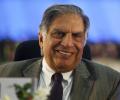
'I think some of us, like Mukesh Ambani, myself and those of us who head industrial units, ought to really focus on what we can really do to make the world a safer place, maybe 50 or 100 years from now.' 'For instance, how can we deal with climate change and global warming, right now?' 'The effects of it may not be felt now; in fact, we may pay a price for it today, but it will help the generations to follow.'
This comes at a time when the group's copper plant in Tamil Nadu remains shut for nearly three years, causing a Rs 5 crore loss every day.

'12% of all our global trips are done in India.'
